CPUC approves first subsidy for Internet via TV white space

19 January 2016 by Steve Blum
, , , ,

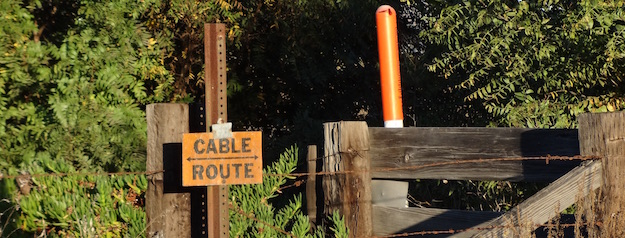
White space below the tree line.

Besides allowing a wireless claim jumper to ace two towns out of fiber to the home service last Thursday, the California Public Utilities Commission approved a $1.1 million grant from the California Advanced Services Fund (CASF) for wireless Internet service in northern Eldorado County. Cal.net’s deployment is the first CASF project to lean heavily on newly available television white space spectrum.

The plan is to use a combination of three bands: unlicensed 5 GHz, LTE in semi-licensed 3.65 GHz spectrum and coordinated TV white space, with three usage cases, i.e.… More

Surprise, Trona and Searles Valley! You've been chopped

18 January 2016 by Steve Blum
, , ,

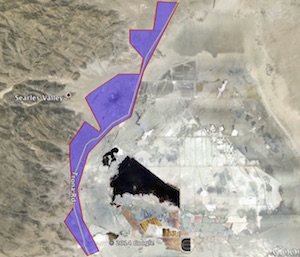
“Do the folks in Trona and Searles Valley that initially expressed strong support for this project, are they aware of this change?” asked commissioner Mike Florio as the California Public Utilities Commission considered a greatly trimmed fiber to the home project proposed for several high desert communities.

“No they are not, mostly likely they are not, unless they were attending today’s meeting and received the [revised] version”, replied Rob Wullenjohn, the CPUC staff manager who oversees the California Advanced Services Fund CASF).… More

Last minute WISP challenge kills FTTH for two California towns

14 January 2016 by Steve Blum
, , ,

No gigabit for you.

It’s still called the Five Mining Communities broadband project, but only three will be getting fiber to the home service, assuming the California Public Utilities Commission approves a $2 million California Advanced Services Fund (CASF) grant as currently drafted at its meeting tomorrow.

Race Telecommunications will get the money to build out in Randsburg, Johannesburg, and Red Mountain, near the junction of Inyo, San Bernardino and Kern counties. But neighboring Trona and Searles Valley are off the list, because of a last minute challenge from a wireless Internet service provider, SBC Wireless, who just popped up in town…

[CPUC] staff followed up with SBC-Wireless and was told that SBC-Wireless began operations in the area in late October 2015, has eight employees, and as of November 20, 2015 has 142 residential customers signed up for service.

More

Thousands of broadband projects in California highways every year, but no one's keeping track

13 January 2016 by Steve Blum
, , ,

A push to get Caltrans – the California department of transportation – to play nice with broadband companies and publish information about where it has conduit available is moving forward in Sacramento. The assembly transportation committee voted unanimously on Monday to send assembly bill 1549, authored by assemblyman Jim Wood (D – Healdsburg), onward toward a full floor vote. That has to happen by the end of the month, in order to make legislative deadlines.… More

New effort to unlock Caltrans' trove of broadband assets

11 January 2016 by Steve Blum
, , ,

Don’t even think of it.

There’s a huge difference in time and cost between building a fiber optic network from scratch – digging trenches and installing new conduit – and creating one using existing resources. That’s how Lit San Leandro and the City of Watsonville’s municipal dark fiber network came to be. It’s doable when cities like San Leandro or Watsonville track conduit, and make that information available to the public.

Get outside of a city, though, and it’s a completely different world.… More

Cable and telco lobbyists block broadband infrastructure subsidies in California

7 January 2016 by Steve Blum
, , ,

Money walks when bullshit talks.

A plan to add more money to the main fund used to subsidise broadband infrastructure in California – the California Advanced Services Fund (CASF) – is stalled, likely fatally. Assembly bill 238 would also have raised the minimum speed for acceptable service to 25 Mbps down/3 Mbps up, once areas with service that doesn’t even meet the current 6 Mbps down/1.5 Mbps up have a shot at upgrading and service at that level is available to 98% of Californian homes.… More

Higher speeds and more money for Californian broadband infrastructure subsidies proposed

6 January 2016 by Steve Blum
, , ,

Adding money to the California Advanced Services Fund (CASF) for broadband infrastructure projects and raising the minimum acceptable speed for Californians to 25 Mbps down/3Mbps up is back on the table in Sacramento.

Assembly bill 238, authored by assemblyman Mark Stone (D – Santa Cruz), would do that. It was introduced last year, but put on hold, largely because of opposition from rural interests. The fear was that raising the minimum speed would take money from rural areas – many of which don’t have broadband service available at the current minimum 6 Mbps down/1.5 Mbps – and give it to urban and suburban communities where available service is merely below average, as opposed to being completely substandard.… More

Telco broadband service is slow, cable is fast says FCC

4 January 2016 by Steve Blum
,

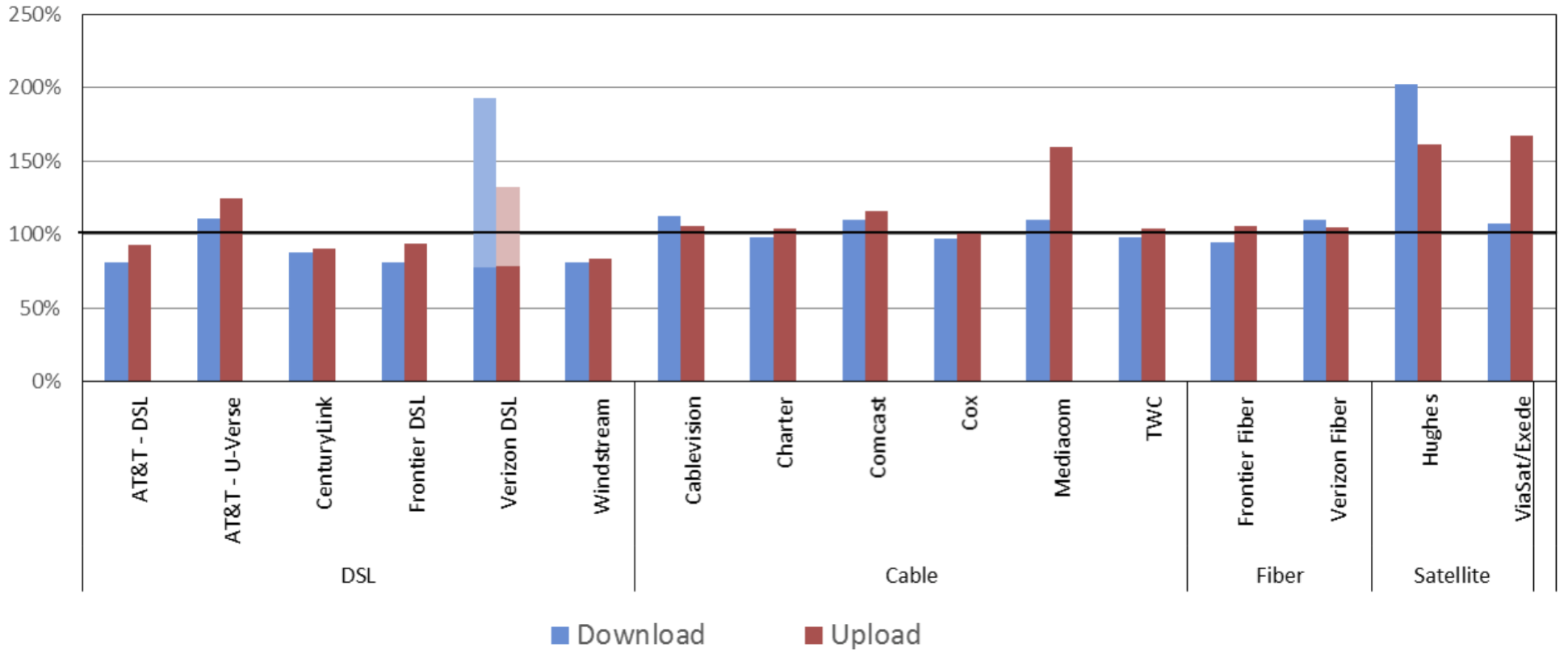
The Federal Communications Commission issued its annual fixed broadband service measurement report just as it slid into the New Year’s holiday. I’m still slogging through the technical data, but the top line conclusions are…

  • Overall, the FCC says, residential broadband speeds and other performance metrics continue to improve.
  • Cable modem service is fast with maximum advertised speeds in the 100 megabit range, faster in real world circumstances than fiber, although only Verizon’s and Frontier’s fiber service were measured.
More

Race targets Sonoma County for FTTH project

2 January 2016 by Steve Blum
, , ,

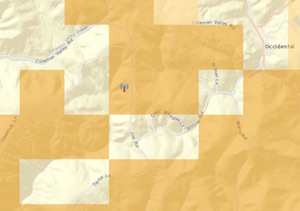
If you head west from Santa Rosa on State Route 12, and take the fork at Occidental Road, about halfway to the Pacific Ocean you’ll come to the town of Occidental. Residents there get broadband service from AT&T and Comcast, but if you go a little further west, the lines end. Race Telecommunications wants to build out a fiber to the home system there, and is asking the California Public Utilities Commission for a $9.1 million grant from the California Advanced Services Fund to do it.… More

Five turning points for broadband policy battles in 2016

31 December 2015 by Steve Blum
, ,

Five policy decisions will drive broadband service in California, for good or ill, in 2016. Two will come at the federal level, two from the California Public Utilities Commission and one from the state legislature. There are more of course – encryption, privacy and implementation of California’s new wireless site shot clock are examples – but these are the ones I’ll be closely following as the new year begins:

  • Assembly bill 238. Introduced by Santa Cruz assemblyman Mark Stone early in 2015, it attempts to raise the minimum Californian broadband standard to 25 Mbps down/3 Mbps up for subsidy purposes.
More