AT&T, cable lobbyists gut California broadband subsidies

20 April 2016 by Steve Blum
, , , ,

Treachery.

Broadband infrastructure subsidies are off the table in Sacramento, thanks to a coordinated campaign by AT&T staff lobbyists and the cable industry’s political front organisation, the California Cable and Telecommunications Association (CCTA). Assembly bill 1758 was pulled by its author, assemblyman Mark Stone (D – Santa Cruz) after it became clear that the California assembly’s utilities and commerce committee was going to spike it at its meeting this afternoon.

Originally, AB 1758 would have put $150 million into the California Advanced Services Fund (CASF) broadband construction subsidy account, and another $200 million in a range of broadband-related programs, including service for hospitals, facilities in public housing, digital literacy and marketing efforts and regional consortia.… More


Faster broadband standard set by federal agriculture department

19 April 2016 by Steve Blum
, , ,

It’ll get there eventually.

Minimum speeds for guaranteed broadband infrastructure loans from the federal agriculture department have been raised. The Rural Utilities Service (RUS) opened another round of loans earlier this month, and upped the benchmark speed for both area eligibility and funded infrastructure from 4 Mbps download/1 Mbps upload to 10 Mbps down/1 Mbps up, for wireline and fixed and mobile wireless projects.

That brings the RUS minimum speeds in line with other federal broadband subsidy programs, particularly the Connect America Fund program run by the Federal Communications Commission, which will be giving more than half a billion dollars to incumbent telephone companies in California alone.… More

AT&T says don't worry about copper lines, California legislators say OK

14 April 2016 by Steve Blum
, , ,

History says otherwise.

AT&T is one step closer to getting blanket permission to yank its copper networks in rural California, and replace them with wireless service as it pleases. On a lopsided vote, the assembly utilities and commerce committee voted to move assembly bill 2395 along toward a full floor vote. Written by AT&T and carried on its behalf by assemblyman Evan Low (D – Silicon Valley), the bill would allow AT&T to replace legacy analog voice telephone networks and service with any functional equivalent, so long as it’s capable of calling 911.… More

Charter-Time Warner deal gets tentative OK in California

13 April 2016 by Steve Blum
, , ,

Broadband counts.

Charter Communication’s purchase of Time Warner and Bright House cable systems in California should be approved if the company sticks to promises that it has made and to agreements it has reached with parties that previously opposed the deal. That’s the draft decision offered by Karl Bemesderfer, an administrative law judge with the California Public Utilities Commission.

Bemesderfer’s proposed decision will go to a vote of the full commission next month. In it, he says that the deal does have some negatives – greater market concentration, for example – but Charter’s promised upgrades and changes to the way it does business makes up for it…

Weighing Charter’s commitments to increased Internet speeds, increased numbers of wireless access points, less onerous contracts, more effective competition in the enterprise space, unbundling of services, equal treatment of content providers and greater diversity in hiring, contracting and programming, all of which will be made explicit conditions of approval of the Transaction, against the increase in concentration of the market for broadband Internet access without the threat of discrimination against competing content creators, we conclude that the benefits of the Transaction outweigh its drawbacks and the Transaction satisfies [the section of the public utilities code that says that such deals must “be beneficial on an overall basis to state and local economies, and to the communities in areas served by the utility”].

More

Kill AT&T's California wireline exit bill, don't bother tinkering with it

11 April 2016 by Steve Blum
, , , ,

AT&T’s ongoing attempt to re-write California law so that it can replace rural wireline broadband and regulated telephone systems with unregulated wireless service is up for a vote in a key assembly committee on Wednesday. It’s opposed by the California Public Utilities Commission, among others. During the CPUC’s debate, commissioner Mike Florio said spike assembly bill 2395, don’t bother rewriting it…

In my legislative work over the years, there was an adage that I learned that you don’t amend a bad bill.

More

AT&T's bid to nix wireline obligations opposed by CPUC

8 April 2016 by Steve Blum
, , ,

End of the line?

AT&T wants to end wireline service where ever it pleases and that drew fire yesterday from the California Public Utilities Commission. But not the whole commission. By a 3 to 2 vote, the CPUC officially went on record as opposing assembly bill 2395, written by AT&T and carried by Silicon Valley assemblyman Evan Low.

The bill itself is dressed up with talk about improving technology and reducing pollution but, as commissioner Catherine Sandoval explained, it gives AT&T blanket permission to do whatever it wants, however it wants, without subjecting itself to inconvenient regulations or bothersome competitors…

This bill would seem to allow a carrier of last resort to keep all the poles, keep all the conduits, keep all the rights of ways, keep the wires, keep the buildings, keep all the facilities that they want, offer none of the services – no basic services – and have no interconnection obligations.

More

FCC says 150 GB is all rural residents need

6 April 2016 by Steve Blum
, , ,

Urban benchmarks for rural residents. Right.


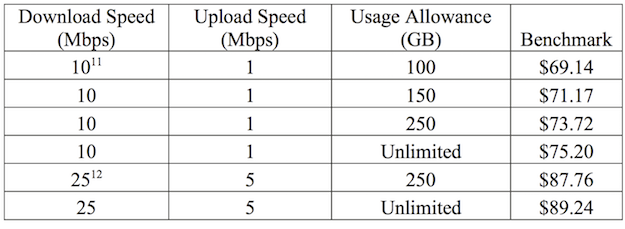
Telephone companies that get federal subsidies to provide rural broadband service have to offer at least one service package with a monthly data cap of 150 GB and charge no more than $71 for it. That’s the top line from an annual survey run by the Federal Communications Commission to set benchmark rates for subsidised service in high cost – also known as rural – areas.
The survey looks at rates paid by consumers in urban areas, in particular those served by cable and fiber to the home systems, and the amount of data they use every month.… More

FCC tells big ISPs to tell the plain truth

5 April 2016 by Steve Blum
, , ,

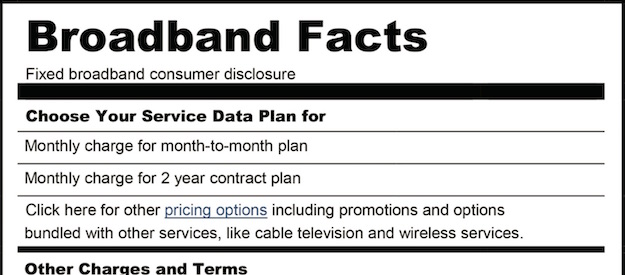
By definition, competition requires market information. Internet service providers, like pretty much any business, have a natural tendency to want to reduce competition. So they make it very difficult to do comparison shopping. Try going to Comcast’s or AT&T’s website and get a fast and straight answer to a simple question: what’s the monthly price for a service package? It takes tenacity to get it, if it can be had at all. It’s one more way to protect a monopoly business from the perils of competition.… More

If red tape could carry data, California would lead the broadband world

4 April 2016 by Steve Blum
, , ,

A Shasta County broadband project is trapped in California’s web of environmental regulations, and it’s going to cost taxpayers $400,000 or more to pull it out. Not to mention that the rural phone company building the project has to stump up a few hundred thousand dollars of its own.

In 2013, the California Public Utilities Commission approved a $3.1 million grant from the California Advanced Services Fund (CASF) to the Happy Valley Telephone Company to pay for 60% of the cost of upgrading its network in and around the small Shasta County town of Olinda to VDSL2 technology.… More

Austin and KC owe Californians a thank you card for paying their Internet bill

31 March 2016 by Steve Blum
, , , ,

The gift that keeps on giving.

The fiber to the premise analysis done by the City and County of San Francisco summed up the likely competitive response to a municipal build in two words: Google Fiber. Incumbents in the markets Google targeted responded with upgrades and lower prices…

The incumbent providers’ responses to Google Fiber’s expansion in other cities may foreshadow their responses to a municipal network in San Francisco. After Google Fiber came to Kansas City, incumbent providers Comcast and Time Warner upgraded their networks to double residential speeds, which lowered the dollar per megabit cost of bandwidth for their customers.

More